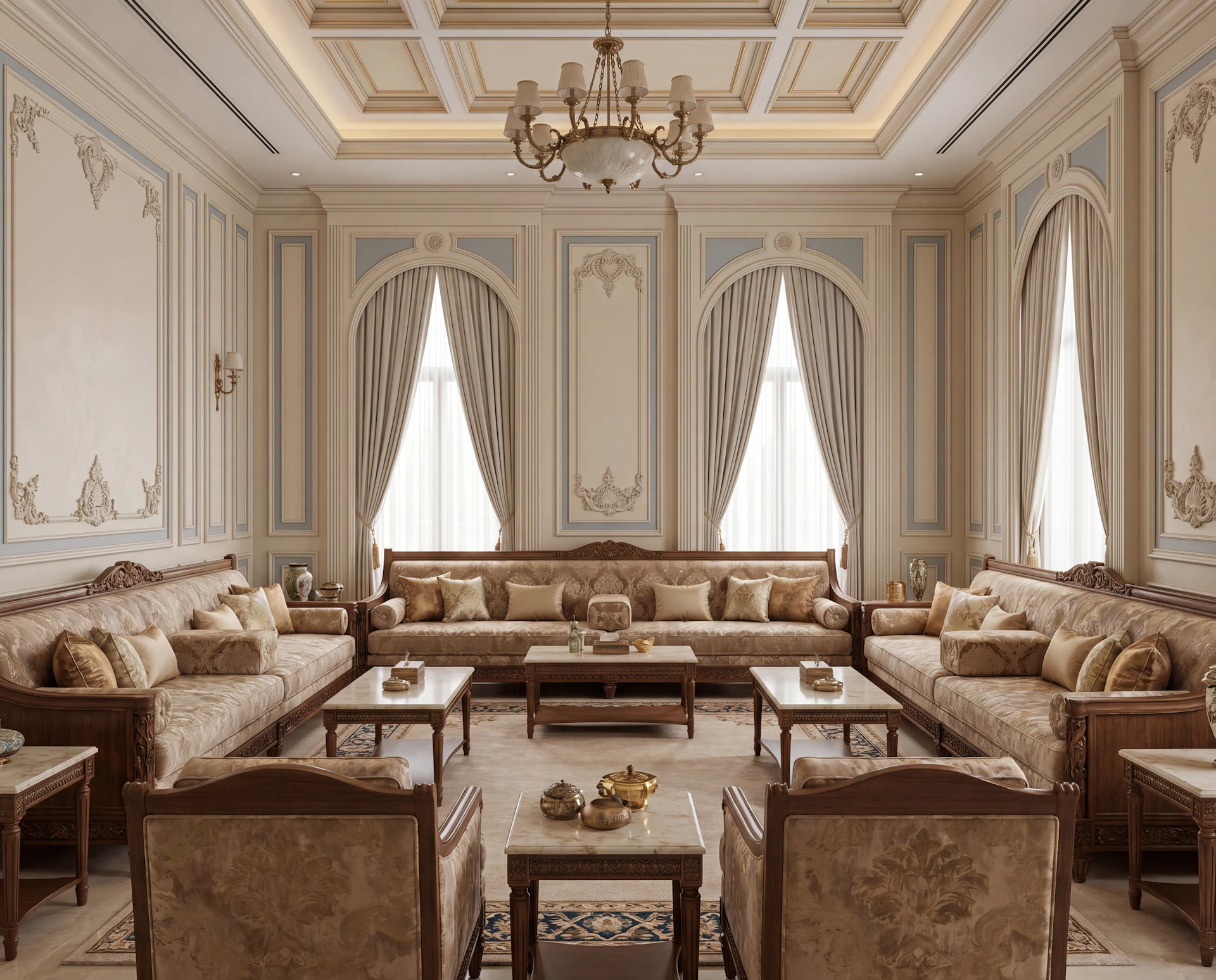
Some homes tell the stories of their inhabitants, others reflect the nature of the place they were built on, and still others succeed in holding the memory of an entire community within their walls. This makes interior design more than just choosing colors or arranging furniture; it's a silent language that expresses identity and preserves details that words cannot convey.
In Saudi Arabia, interior design doesn't begin with choosing a wall color or a new piece of furniture, but rather with the memory of the place. It begins with the mud houses that welcomed light through their courtyards, with the carved wooden doors, and with the majlis (traditional sitting rooms) that were built to bring people together before they were built to impress them. It begins with the relationship that the environment forged with architecture, and with the solutions devised by our ancestors to suit the climate, provide comfort, and reflect both generosity and privacy.
These details were not merely aesthetic elements, but a natural response to a way of life. Interior corridors were not just architectural spaces; they were sources of air and light, and places where families gathered. The majlis (reception room) was not merely an additional room in the house, but a space imbued with social and cultural value, designed to be an extension of the hospitality culture for which the Kingdom has been renowned for generations.
As lifestyles evolved, so did the needs of homes, but one thing remained constant: the desire for a home to embody a part of its owners' identity and reflect the place it belongs to. Homes became more open, materials evolved, and modern technologies permeated every corner, yet people still sought that feeling that made them say, "This home is like me." Therefore, modern design no longer means abandoning heritage, nor does preserving identity mean recreating the past exactly as it was. Rather, design has become a space for dialogue between two eras: an era rich with stories and an era that seeks simplicity and comfort. The goal is no longer to reproduce a Najdi or Hijazi house as it was a century ago, but to draw inspiration from its spirit and present it in a way that suits contemporary lifestyles.
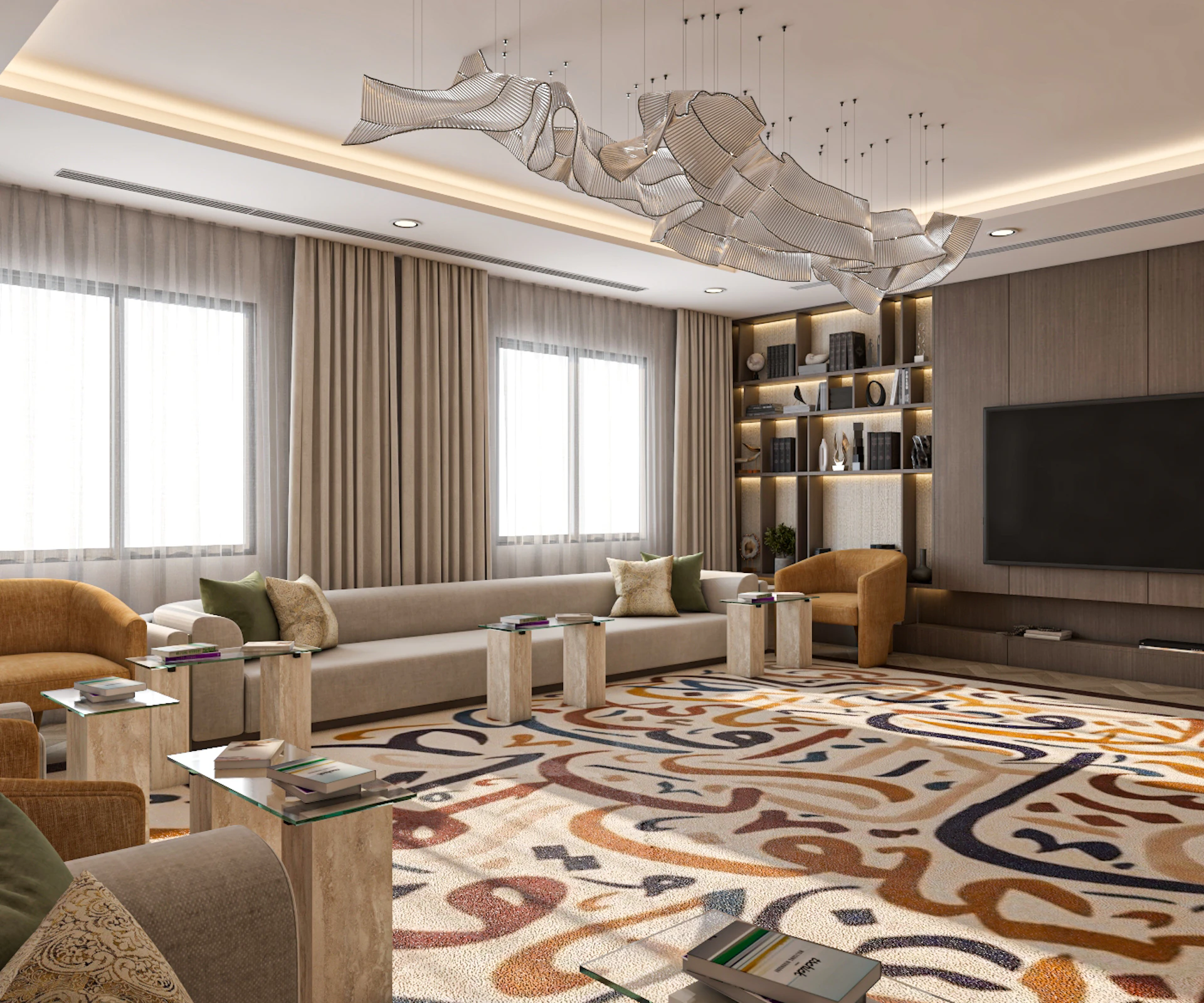
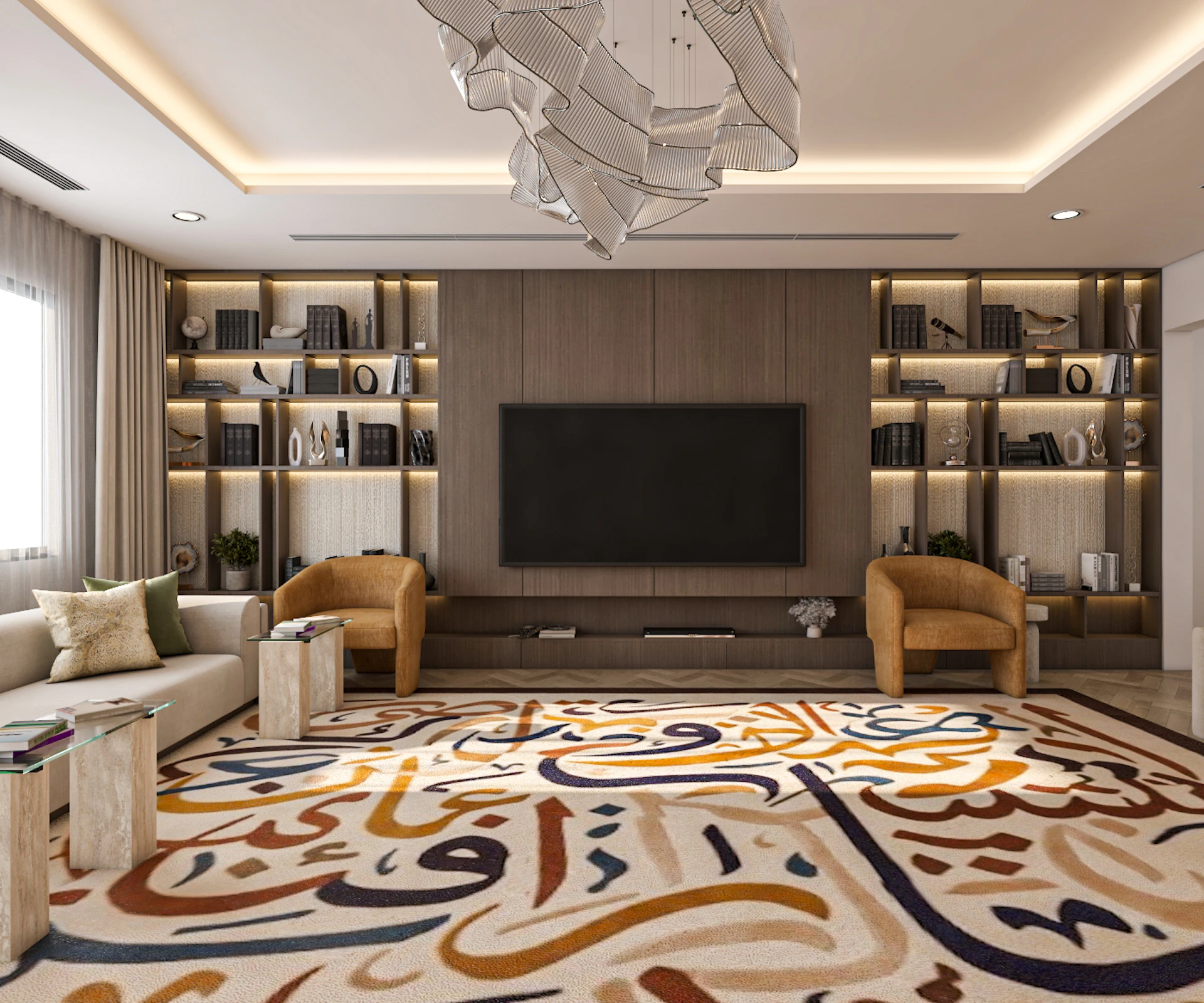
Today, this balance can be seen in many residential projects across the Kingdom. A house may have modern facades and simple architectural lines, yet retain touches inspired by Saudi heritage within its interior. This might be evident in warm wood tones, a wall adorned with details inspired by Najdi architecture, an artwork reflecting local culture, or even a color palette inspired by the desert sands, mountains, and oases of the Kingdom.
Answer a few questions about your vision and preferences.
We’ll be in touch within 24 hours to schedule your free consultation.
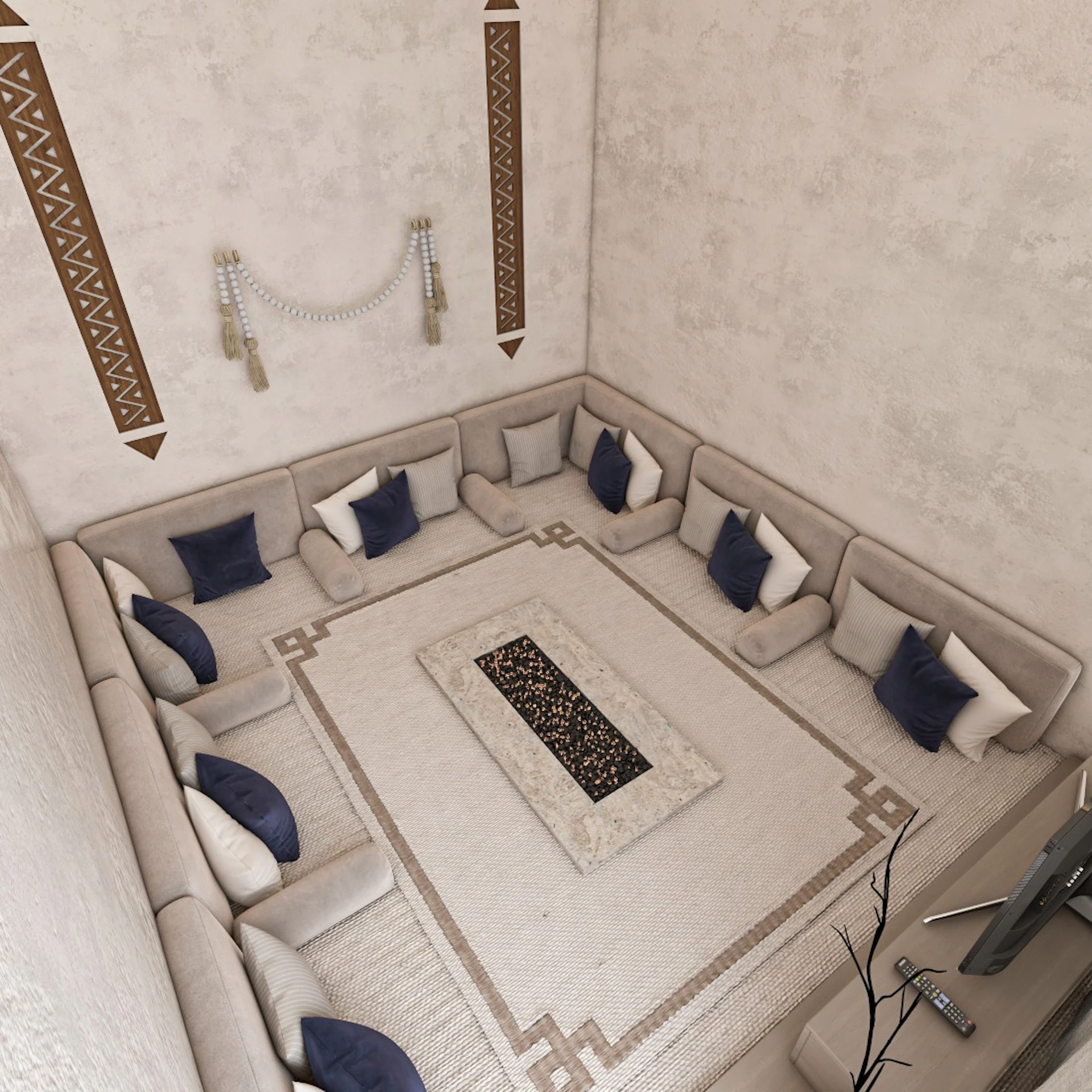
The beauty of this is that these details are not used simply because they are "traditional," but because they give the house a sense of belonging. When a person enters a space that resembles their environment and culture, they experience an inexplicable comfort, as if the place were familiar even if it is new. These are small details, but they create an emotional connection between the person and the home, making the design more authentic than merely following the latest trends.
Furthermore, identity is not limited to decorations or patterns; it extends to the very way the design is conceived. Privacy, for example, has always been a fundamental element in the design of Saudi homes, but the methods of achieving it have evolved over time. Likewise, the idea of family cohesion, which was previously reflected in courtyards and councils, can today be translated through spacious living areas that encourage gathering and communication, while maintaining the needs of modern life.

One of the most beautiful aspects of contemporary Saudi design is that it doesn't try to compete with the world, but rather seeks to present itself to the world. Instead of importing every idea wholesale, many designers are now reinterpreting it to suit local culture. Natural materials become a fundamental element of design, lighting becomes warmer, and colors are carefully chosen to reflect the nature of the land and climate, not just fleeting seasonal trends.
We have also begun to see a growing interest in local handicrafts, products made within the Kingdom, and artwork created by Saudi artists. The presence of these elements is no longer merely an aesthetic addition, but has become part of the home's story, connecting the past with the present and giving the space a unique character that cannot be easily imitated.
Perhaps this is why Saudi projects in recent years have garnered international attention. They offer not just beautiful spaces, but experiences with a distinct identity. This identity doesn't rely on excessive ornamentation or excessive detail, but on a deep understanding of what makes a place Saudi without needing to proclaim it loudly. Every material, every color, and every small detail can convey a message about the culture from which the design originated.
With the flourishing of the architectural landscape in the Kingdom, it has become clear that interior design is no longer merely a means of beautifying homes, but rather a way to preserve identity and present it to new generations. A home that blends modernity and heritage does not dwell in the past, nor is it detached from it; instead, it builds a bridge connecting the two, proving that authenticity does not conflict with progress, but rather lends it depth and meaning.
Ultimately, the success of design lies not in its ability to keep up with the latest trends, but in its ability to stand the test of time. A home that reflects the culture of its owners, respects the history of the place, and responds to the needs of the present is a home that will remain beautiful for many years to come. Because true beauty is not tied to fleeting fashions, but to a story worth telling, an identity worth preserving, and a design that makes everyone who enters feel they are in a place unlike any other.